
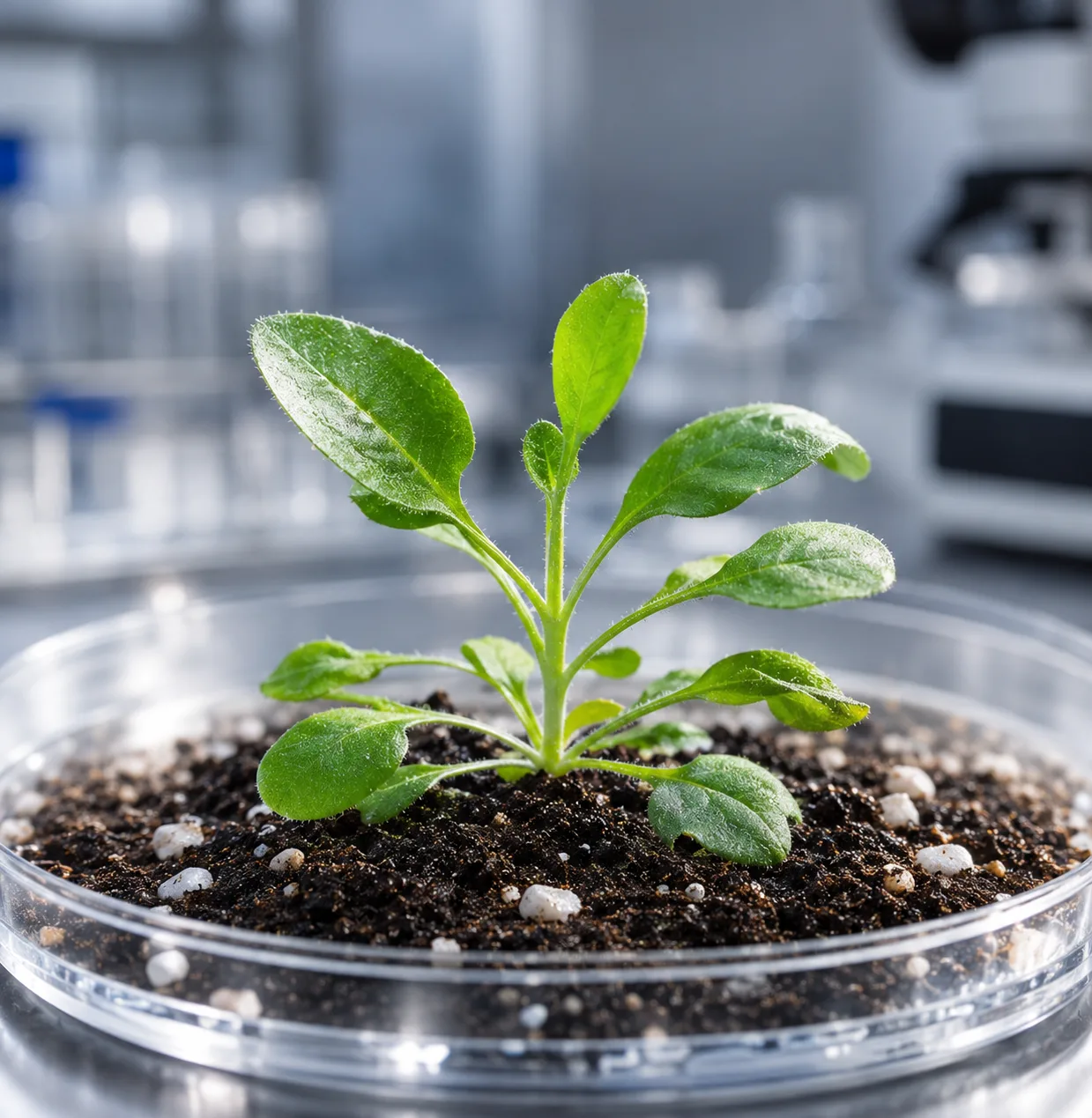
Why Automated Measurement Matters Now
Indian plant science is producing new lines faster than they can be measured. ICAR has opened speed-breeding facilities for mustard, oilseeds and rice, including a Rs 12 crore facility at ICAR-IIRR Hyderabad in 2026. India released the world’s first genome-edited rice varieties in 2025. Each new line has to be screened under controlled conditions.
Most of that screening is still done by hand: a ruler for height, a visual score for stress, a destructive harvest for leaf area. Manual scoring is slow, varies between observers and misses everything that happens between measurement days.
The bigger problem is data quality. AI models for plant science need large, consistent image datasets with the exact growing conditions recorded, and such data is scarce, especially for Indian crops. Greenhouse conditions change with the weather outside; growth chambers can hold conditions steady and record them.
AI-ready chambers are built for this. Cameras record every plant on a fixed schedule, a light sensor at plant level records the light at each image, and the chamber’s logs record temperature, humidity and CO₂. Every image is saved with its conditions, giving research-grade data that researchers can analyse with statistics or machine learning, and publish with confidence.
At a glance
- Remote monitoring and logged climate data
- Images matched to their growing conditions
- Automatic plant-trait measurement
- Data stored on your institute's systems
- 2027 pilot open to institutes
Three levels
What “AI-Ready” Means
Every chamber or room can be specified at one of three levels, and upgraded later.
| Level | What it includes |
|---|---|
| 1. AI-ready | Remote monitoring and logged climate data from the Percival IntellusUltraConnect controller, with sealed cable entry, power and network prepared for cameras |
| 2. Fixed imaging | Colour cameras and a thermal camera on fixed mounts, with automatic plant-trait measurement |
| 3. Moving imaging | A moving camera head for whole-area thermal or overhead imaging, for phenomics programmes |
Imaging packages are being validated in a 2027 pilot programme. Contact us for availability.
Formats
Two Formats, One Platform
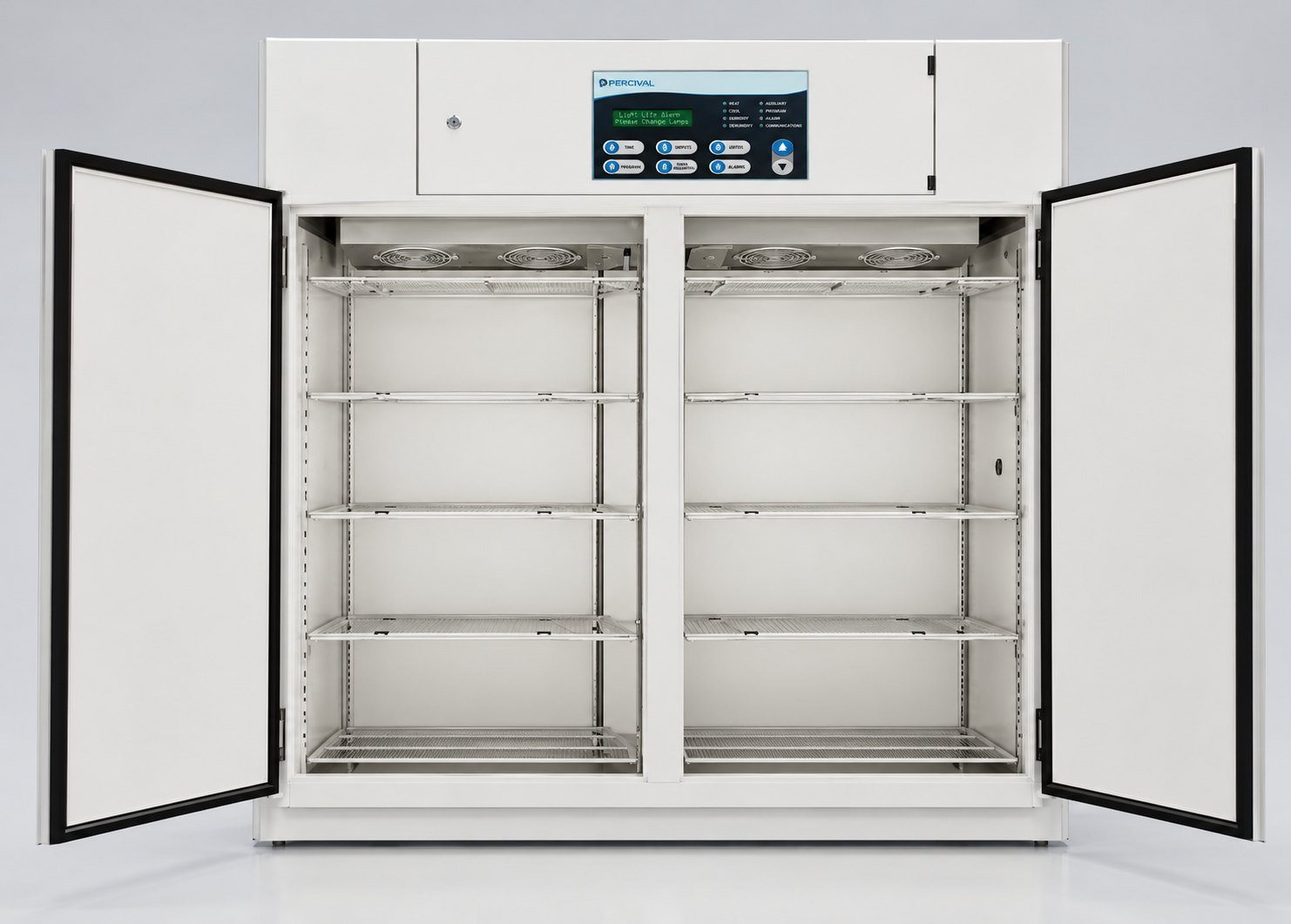
Percival reach-in plant growth chambers with precise control of temperature, humidity and light. Small cameras sit on the front edge of each shelf tier, and cables pass through the chamber’s sealed access port. Suited to Arabidopsis, seedlings, stress studies and gene-function work.

Shown with the optional touchscreen controller. A keypad controller is supplied as standard.
AI-ready walk-in rooms, sized to your building and fitted with Percival climate control and lighting, are coming soon. Cameras will be mounted at the upper wall edges and at plant height, so the light canopy stays unchanged. Suited to speed breeding and crop-scale stress screening. Register your interest and we will share full details as soon as they are available.
Workflow
How It Works
1
Capture
Cameras photograph the plants at the same time each day, during a short fixed-light window in the chamber program.
2
Match
Each image is stamped with the controller’s temperature, humidity, light and CO₂ readings.
3
Measure
Open-source PlantCV software calculates plant size, height, colour and growth rate. Calibration targets correct for camera angle and colour.
4
Analyse
You receive one dataset with one row per plant per day, ready for statistics, machine learning or publication.
Traits
What You Can Measure
| Measurement | Camera | What it tells you |
|---|---|---|
| Projected leaf area and canopy cover | Colour, top or angled view | Plant size and growth rate, day by day |
| Plant height and width | Colour, side view | Growth habit and stage |
| Greenness and yellowing | Colour, with colour card | Nutrient status, senescence and stress symptoms |
| Canopy temperature difference | Thermal | Early sign of water stress, as stressed plants close their stomata and warm up |
| Growing conditions at each image | Chamber controller | Temperature, humidity, light and CO₂ behind every data point |
Image-based traits are calibrated against destructive harvests for each crop.
Data quality
Data You Can Trust and Publish
- Climate logs from the Percival IntellusUltraConnect controller, with remote monitoring and alerts.
- Images and conditions matched automatically by timestamp.
- Data stored on your own institute systems.
- Experiments described using MIAPPE, the international metadata standard for plant phenotyping.
- Walk-in rooms handed over with a performance-mapping report, following international controlled-environment guidelines.
Applications
Applications
Speed breeding
Follow growth and flowering across several generations a year without extra manual scoring.
Abiotic stress screening
Compare drought, heat and humidity responses daily, and catch stress before it is visible.
Screening genome-edited lines
Test many edited lines side by side under identical, logged conditions.
Arabidopsis and model plants
Track rosette growth on every shelf through the whole experiment.
Pilot programme
The 2027 Pilot Programme
JKG BioScience is inviting research institutes to pilot AI-ready imaging in an existing growth chamber in early 2027. JKG provides and supports the imaging module at no cost to the institute. The institute’s team designs a short experiment and compares the automated measurements with its usual manual methods. Pilot partners may also join a planned joint funding application.
Tender and compliance documents
Catalogues and Compliance Documents
Catalogues, datasheets and certificates for purchase files and government tenders. Need a document that is not listed? Ask us.
FAQ
Frequently Asked Questions
Answers to the questions we hear most. Can’t find what you need? Our team will help.
Can I add cameras to a chamber I already own?
Percival reach-in chambers have a sealed access port for cables. Contact us to check your model.
Do the cameras affect the chamber's conditions?
They are mounted outside the main airflow and checked against the chamber’s logs during installation. Validating this is part of the pilot.
Where is my data stored?
On your institute’s own computers and storage. JKG does not host research data.
Do I need to know programming?
No. Results come as a spreadsheet and a simple dashboard. Researchers who code can also work with the raw images and data.
Can I upgrade later?
Yes. Every chamber and room can be prepared for imaging and upgraded when funding allows.
Which crops does it work for?
Cereals, oilseeds, pulses, vegetables and model plants. Calibration is done for each crop.
Related pages
Related equipment
Related Equipment

Shown with the optional touchscreen controller. A keypad controller is supplied as standard.
Shown with the optional touchscreen controller. A keypad controller is supplied as standard.

Plan an AI-Ready Chamber or Room
Tell us about your crops, experiments and space, and we will propose the right chamber, room size and imaging level.