
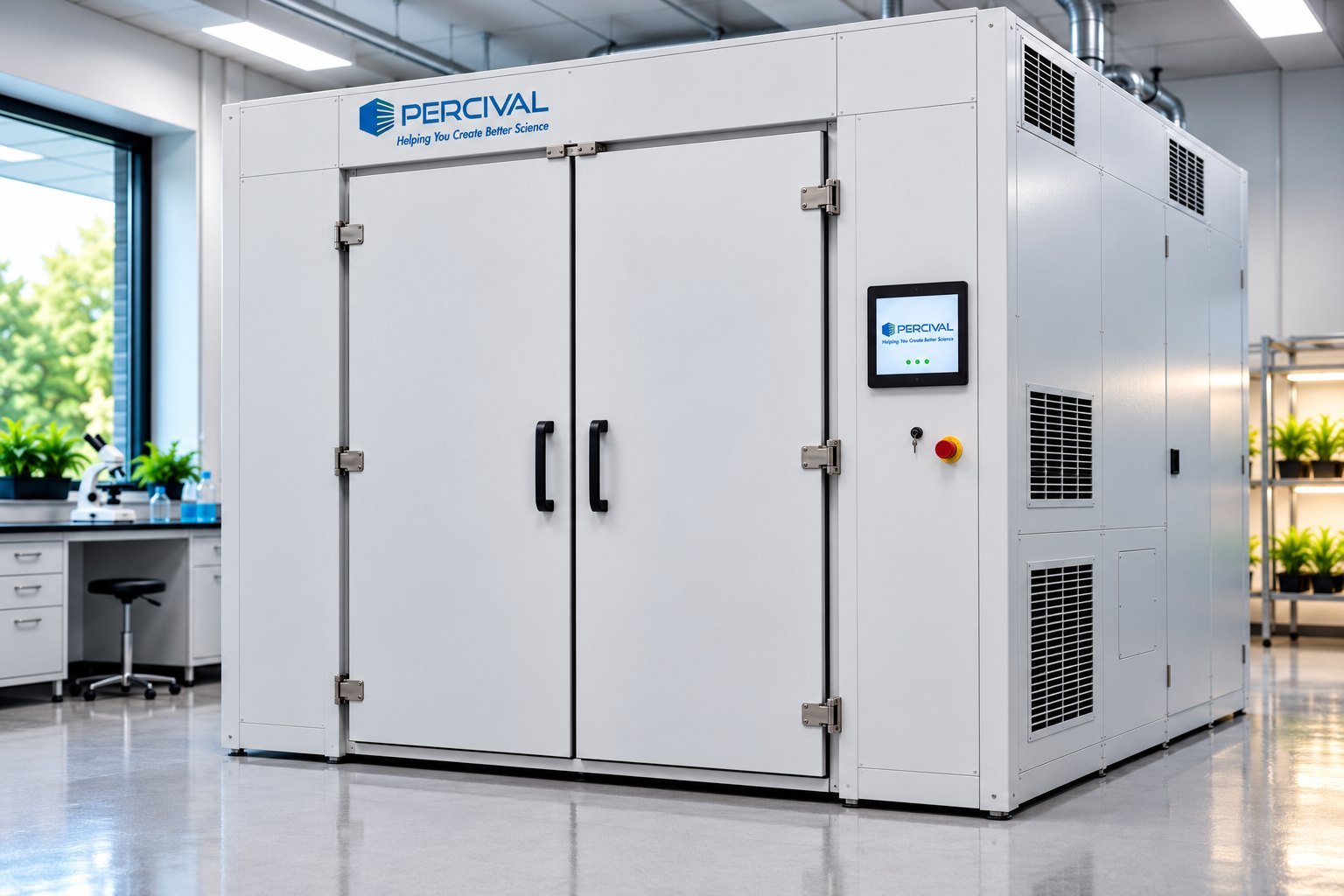
Small Animal and Bird Studies in Controlled-Environment Chambers
- Photoperiod and seasonal studies in birds
- Circadian rhythm studies
- Temperature and thermal physiology
- Acclimation before experiments
- Amphibian and insect studies
- Behaviour under controlled conditions
What to Define Before Choosing a Chamber
| What to plan | Questions to answer |
|---|---|
| Species and numbers | Which species, how many animals, and for how long? |
| Housing | Cage or enclosure dimensions, and how many per shelf? |
| Temperature | Set point and range; any cycles or heat or cold challenges? |
| Humidity | Target range and whether it must be actively controlled |
| Light | Photoperiod, intensity, ramping (dawn and dusk) and any special wavelengths |
| Air exchange | Fresh-air supply, filtration and removal of ammonia, CO₂ and moisture |
| Access and hygiene | Daily checks, observation, cleaning and waste removal |
| Compliance | IAEC approval and CCSEA guidelines for your facility |
Options Used for Animal Configurations
Fresh-air ports
Observation window
Programmable photoperiod
Humidity control
From Study Design to a Confirmed Configuration
Share your protocol
Configuration review
Quotation
Changes later
Catalogues and Compliance Documents
Frequently Asked Questions
Can a growth chamber or incubator be used for mice or birds?
Controlled-environment chambers and walk-in rooms can be configured for small-animal studies, including work with mice and birds. Whether a configuration suits your study depends on the species, number of animals, cage sizes, ventilation and the conditions you need, so suitability for each study is confirmed with the manufacturer before quotation.
What does Percival say about animal work?
Percival lists insect and amphibian studies among the applications of its lighted incubators, and offers options such as a door with two fresh-air ports and a large observation window. For mice and birds we confirm each configuration with Percival before quoting.
Why is fresh air important?
Animals consume oxygen and produce CO₂, moisture, heat and ammonia from urine and droppings. A sealed cabinet without air exchange lets these build up. Fresh-air ports and the right air-change rate are part of every animal configuration we propose.
Do we need ethics approval?
Yes. Experiments on animals in India must be approved by your Institutional Animal Ethics Committee (IAEC) and follow the guidelines of CCSEA (Committee for Control and Supervision of Experiments on Animals, formerly CPCSEA). The chamber controls the environment; your approved protocol and facility rules decide how it is used.
Can a chamber control photoperiod for bird studies?
Yes. Programmable controllers set light duration, intensity and ramping, which is how photoperiod is changed in seasonal and circadian studies. Supplemental LED colours, including UVA, can be added where your protocol needs them.
Can you build a room instead of a cabinet?
Yes. Walk-in rooms are built to size with controlled temperature, humidity and lighting, which suits larger numbers of cages or aviaries. See walk-in growth rooms.