
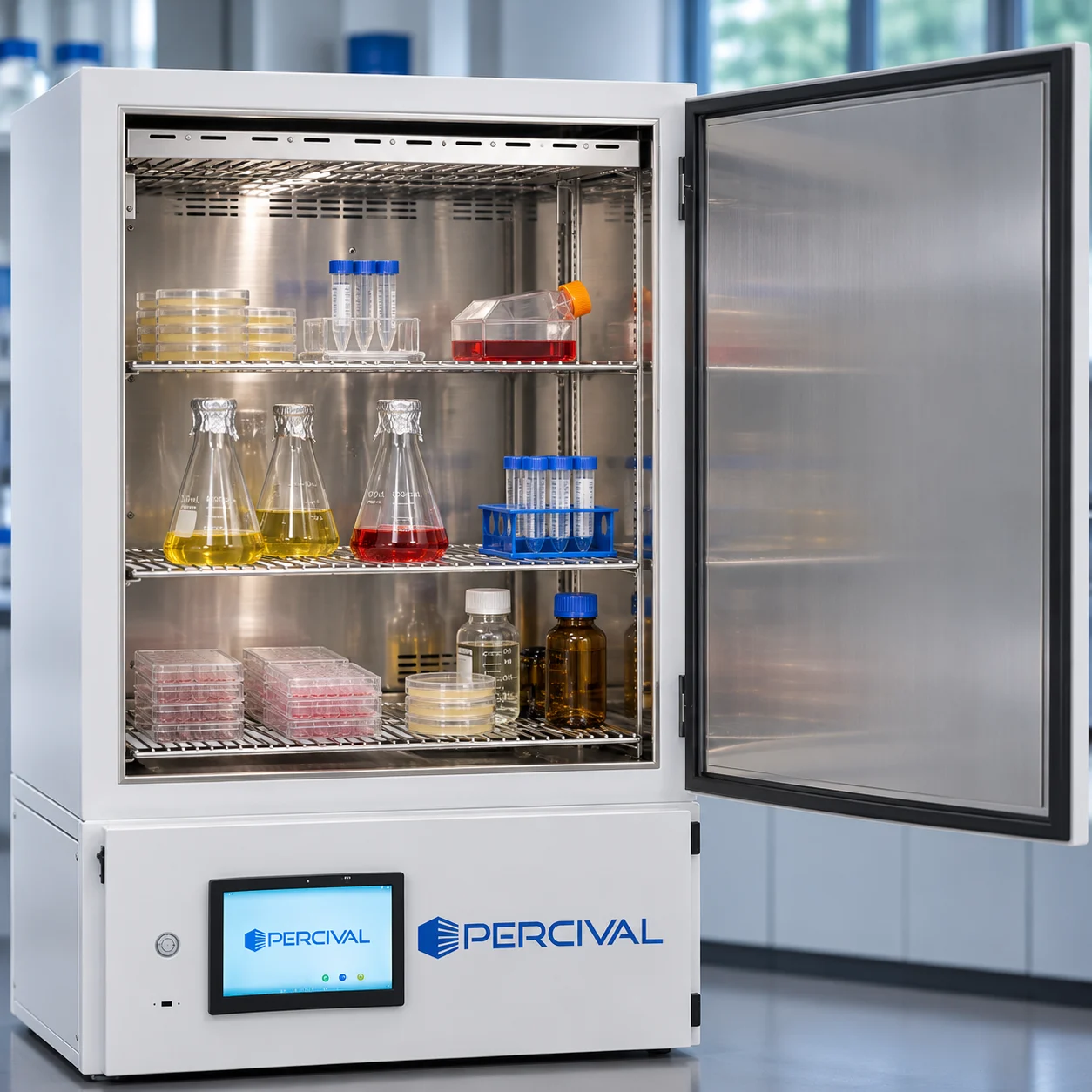
BOD and Refrigerated Laboratory Incubators
Percival and JKG Universal Series refrigerated incubators, supplied, installed and serviced by JKG. What sets them apart from a basic BOD incubator:
- Refrigerated, from 2 °C: set points below room temperature, such as the 20 °C BOD test, are held by a cooling system and not by the room.
- ±0.5 °C control across the 2 to 44 °C range.
- Four cabinet sizes: 0.3 m³ bench-height units to 1.8 m³ two-door units, with up to 6 m² of shelf area.
- Lighted versions from 100 to 230 µmol/m²/s, with programmed day and night periods.
- Purpose-built variants: Drosophila incubators with coated coils and a mycology incubator.
- From 2 °C, held to ±0.5 °C
- 0.3 to 1.8 m³ cabinets
- Up to 6 m² of shelf area
- Non-lighted and lighted versions
- Programmed day and night steps
- Installed and serviced by JKG
Incubators We Supply
Non-lighted incubators
Lighted and specialised incubators
Refrigerated shaking incubator
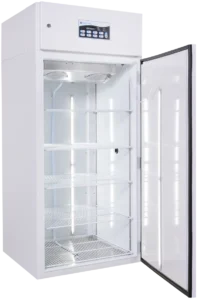
Percival I-36VL
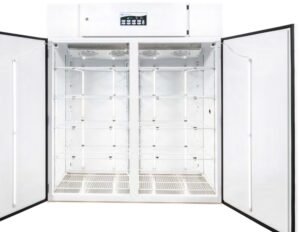
Percival I-66LLVL
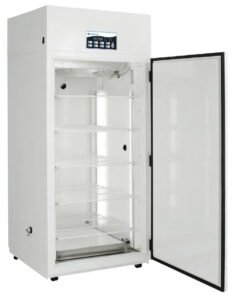
Percival M-36VL (mycology)
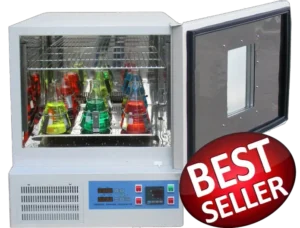
MRC LOM-150
Incubator Specifications
| Model | Type | Volume | Shelves and area | Temperature | Light (µmol/m²/s) |
|---|---|---|---|---|---|
| I-30NL | Non-lighted, bench height | 0.3 m³ | 3 shelves, 0.8 m² | 2 to 44 °C | None |
| I-36NL | Non-lighted | 0.8 m³ | 6 shelves, 3.0 m² | 2 to 44 °C | None |
| I-41NL | Non-lighted | 1.1 m³ | 6 shelves, 3.8 m² | 2 to 44 °C | None |
| I-66NL | Non-lighted, two doors | 1.8 m³ | 6 shelves, 6.0 m² | 2 to 44 °C | None |
| JKG-41NL | Non-lighted | 1.1 m³ | 5 shelves, 3.2 m² | 2 to 40 °C | None |
| JKG-66NL | Non-lighted, two doors | 1.8 m³ | 6 shelves, 6.0 m² | 2 to 44 °C | None |
| I-36LL, I-41LL, I-66LL | Lighted | 0.8, 1.1, 1.8 m³ | 4 tiers, 2.0 to 4.0 m² | 4 to 44 °C | 100 to 120 |
| I-36VL, I-41VL, I-66VL | Lighted | 0.8, 1.1, 1.8 m³ | 5 tiers, 2.5 to 5.0 m² | 4 to 44 °C | 120 |
| I-36LLVL, I-41LLVL, I-66LLVL | Lighted, higher light | 0.8, 1.1, 1.8 m³ | 4 tiers, 2.0 to 4.0 m² | 4 or 5 to 44 °C | 220 to 230 |
| M-36VL | Mycology | 0.8 m³ | 4 tiers, 2.5 m² | 5 to 44 °C | 120 |
| MRC LOM-150 | Refrigerated shaking incubator | 150 L | Shaking platform 480 × 380 mm, up to 300 rpm, 1 shelf | 0 to 70 °C | None |
Percival and JKG figures as published by Percival Scientific; those models hold ±0.5 °C. MRC LOM-150 figures as published by MRC. We confirm the exact configuration in the quotation.
Why Laboratories Choose Percival Incubators
Cools as well as heats
Steady temperature
Day and night programmes
A size for every lab
Built for the organism
Supported locally
Typical Uses
How to Choose a Laboratory Incubator
First compare your set temperature with the temperature of the room. Anything at or below room temperature needs a refrigerated incubator. Then count the bottles, plates or racks you run at once and match them to the shelf area. Choose a lighted version only if the organism needs a day and night cycle. If the work needs CO₂ control it is a different instrument: see CO₂ incubators.
- Set temperature and room temperature
- Number of bottles, plates or racks per run
- Whether lights are needed
- Data recording and alarms required
- Floor space and power supply
Catalogues and Compliance Documents
Catalogues, technical specifications and compliance documents are available on request for institute purchases and tenders.
What is a BOD incubator?
An incubator that can hold 20 °C, the temperature of the five-day biochemical oxygen demand test for water. Because 20 °C is below room temperature in most laboratories, it must refrigerate as well as heat. The name is now used for cooled incubators in general.
What temperature range do these incubators cover?
Non-lighted Percival models run from 2 to 44 °C and lighted models from 4 to 44 °C, held to ±0.5 °C. The JKG-41NL runs from 2 to 40 °C.
Are lighted versions available?
Yes. LL, VL and LLVL versions provide 100 to 230 µmol/m²/s with programmed day and night periods.
How is a BOD incubator different from a CO₂ incubator?
A BOD incubator controls temperature only. A CO₂ incubator also controls the CO₂ level and humidity around the samples, which animal cell cultures need.
Do you install and service the equipment?
Yes. JKG installs the chamber, trains your users and provides preventive maintenance, AMCs and spare parts with its own engineers, along with quotations and compliance documents for institute and tender purchases.